Sagging gutters, leaking joints, and storm damage left unaddressed put the entire home at risk. Professional gutter repair restores proper drainage and prevents costly water damage to foundations and landscaping.
Call anytime
(512) 737-7412
The most frequent gutter issue across Central Texas is sagging, which occurs when hangers corrode, loosen from the fascia, or fail under the weight of debris-laden water during heavy storms. A sagging section disrupts the pitch that moves water toward the downspout, creating standing pools that accelerate further deterioration.
Leaking joints rank second. Even on seamless systems, joints exist at corners, end caps, and downspout connections. The sealant in these spots breaks down under UV exposure and thermal cycling, eventually allowing water to seep behind the gutter and onto the fascia board. Left unchecked, that moisture leads to wood rot and invites carpenter ants and other pests.
Downspout clogs round out the list. When debris passes through the gutter and lodges in the downspout elbow, water backs up into the run and overflows at the lowest point. The EPA's guidance on residential water management underscores how uncontrolled runoff contributes to soil erosion and foundation movement — problems that are amplified on the region's expansive clay.
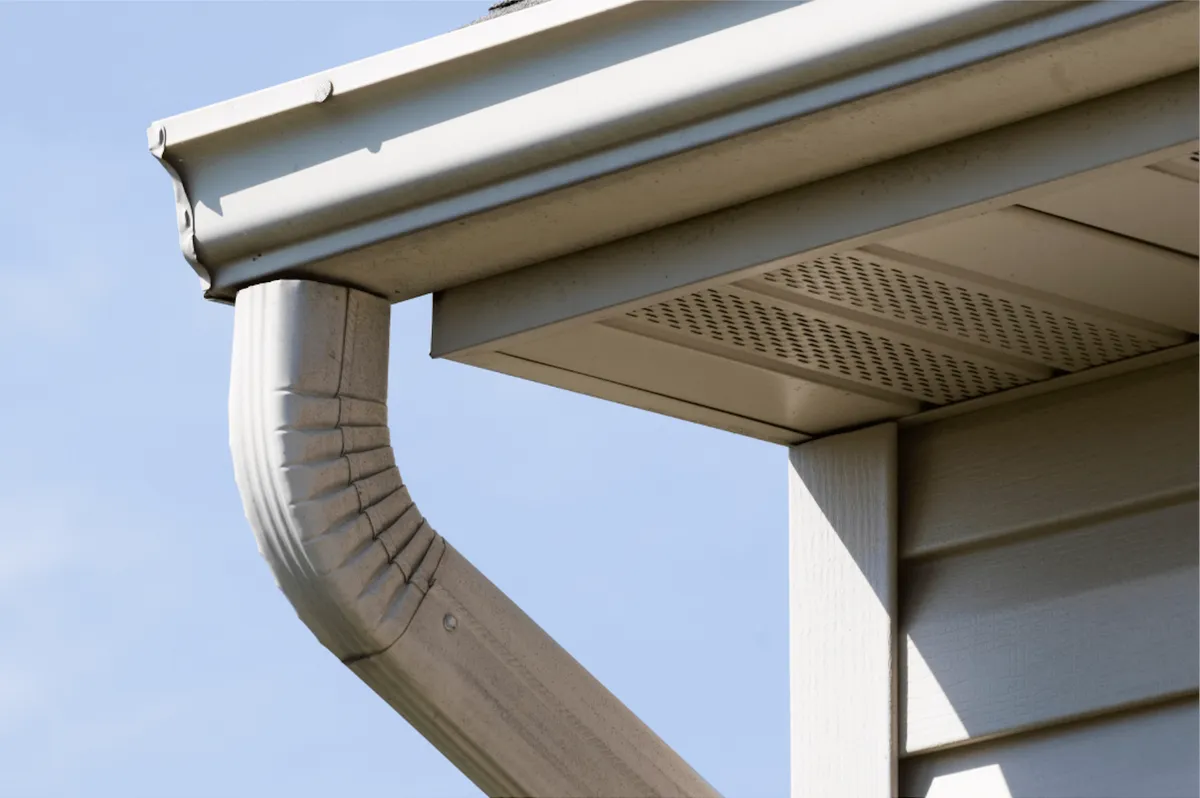
Not every gutter problem requires tearing the entire system off the house. When damage is limited to one or two sections and the rest of the system is structurally sound, targeted repairs offer a far better return than a full replacement. Re-sealing joints, replacing failed hangers, and re-pitching a sagging run can restore function for a fraction of the cost.
The decision shifts toward replacement when gutters are more than 20 years old, when multiple sections show simultaneous failure, or when the underlying fascia has sustained significant rot. Aluminum gutters that have been repainted or patched repeatedly may also be nearing end of life, as the metal itself thins over decades of thermal cycling.
A professional assessment reveals which category the system falls into. The technician evaluates hanger integrity, measures pitch, inspects seams and end caps, and checks fascia condition behind the gutter. That honest assessment — repair or replace — saves homeowners from both overspending on a new system and underspending on a temporary fix.
Foundation damage caused by uncontrolled water runoff regularly exceeds $10,000 in the Austin area, and many cases run well beyond that figure. The expansive clay soils throughout Central Texas swell when saturated and shrink during drought, creating the movement that cracks slabs and displaces piers. Functional gutters are the first line of defense — keeping rainwater channeled away from the foundation where it belongs.
Transparent Pricing
| Repair Type | Typical Cost | Best For | Duration |
|---|---|---|---|
| Leak Sealing | $75 – $200 | Joint, corner, and end-cap leaks | Under 1 hour |
| Re-Pitching | $150 – $400 | Standing water, improper slope | 1–2 hours |
| Hanger Replacement | $100 – $250 | Sagging or pulling away from fascia | 1–2 hours |
| Section Replacement | $200 – $600 | Storm damage, holes, crushed runs | 2–3 hours |
| Full System Replacement | $1,200 – $3,500 | End-of-life systems, widespread failure | 4–8 hours |
Prices are estimates and may vary based on accessibility, material matching, and extent of damage. Call for a free assessment.
Free assessments for all gutter repair needs across Central Texas.
How It Works
A technician examines the entire gutter system, identifies failure points, checks fascia condition, and provides an honest assessment with repair options.
Damaged sections are sealed, re-hung, re-pitched, or replaced on-site. Materials are matched to the existing system for a seamless result.
The repaired system is tested with water to confirm proper pitch, seal integrity, and downspout flow. All debris is removed from the property.
Common Questions
Serving the Greater Austin Area
Storm damage and age-related wear affect gutter systems differently depending on the neighborhood. In Austin, older homes in established neighborhoods like Travis Heights and Tarrytown frequently need hanger replacement and re-pitching after decades of exposure. Cedar Park and Round Rock homes built during the early 2000s building boom are now reaching the age where original builder-grade gutters begin failing at the seams. The steep terrain in Lakeway and Westlake Hills puts extra stress on gutter hangers due to higher water velocity on long roof runs. Georgetown properties near the San Gabriel River and Pflugerville homes along Gilleland Creek are especially prone to overflow damage during flash flood events. Whether the issue is a leaking joint in Dripping Springs, sagging fascia in Leander, or storm-torn sections in Spicewood or Buda and Kyle, professional assessment ensures the right repair approach for each situation.
Free assessments available for homes throughout Bee Cave, Austin, and the surrounding Hill Country communities.
(512) 737-7412 Schedule a Free Assessment